Foreign-led selling sends benchmark down nearly 10%, triggering trading halt
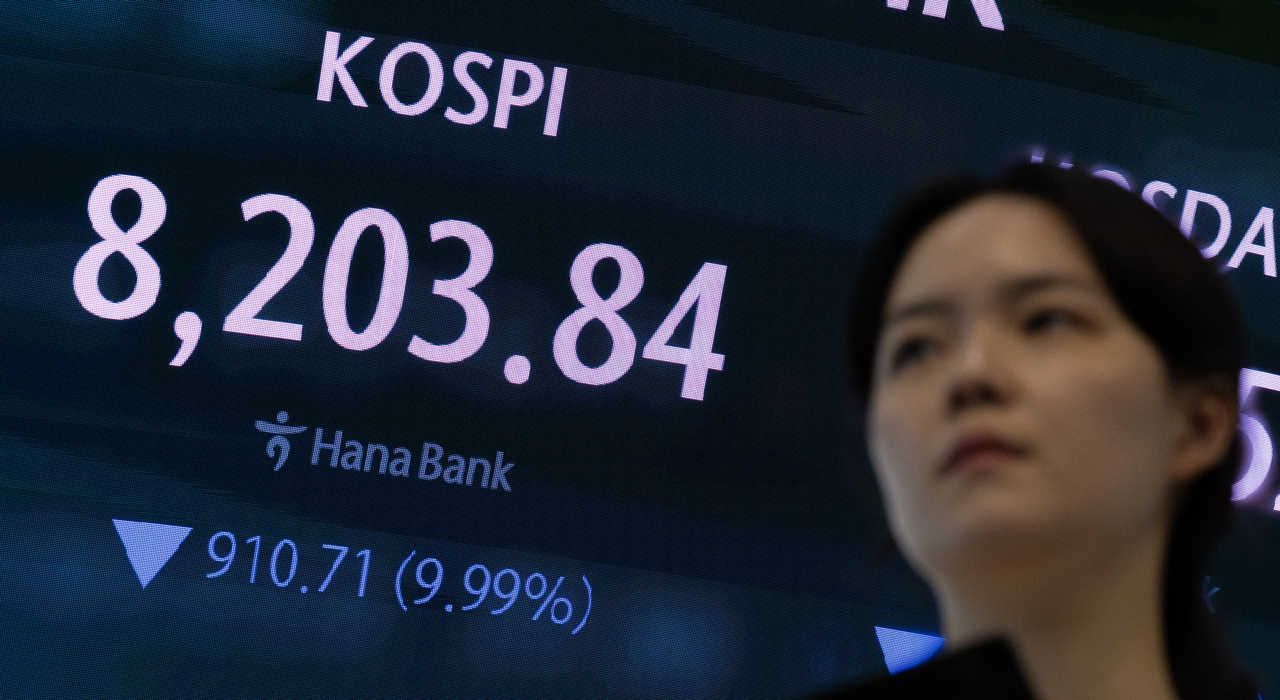
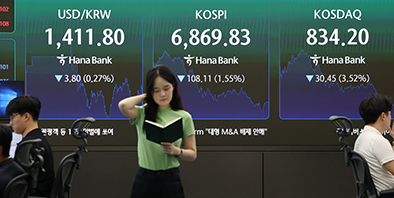
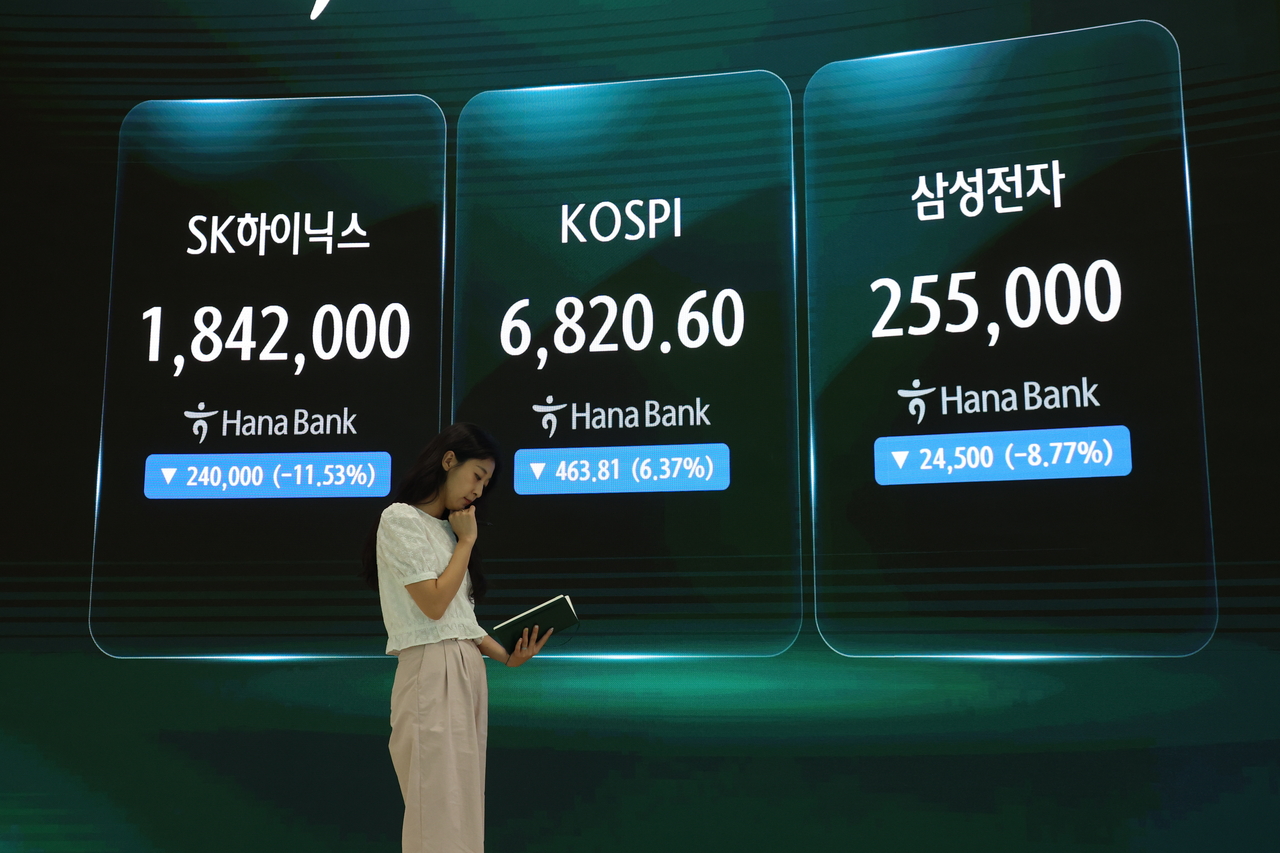
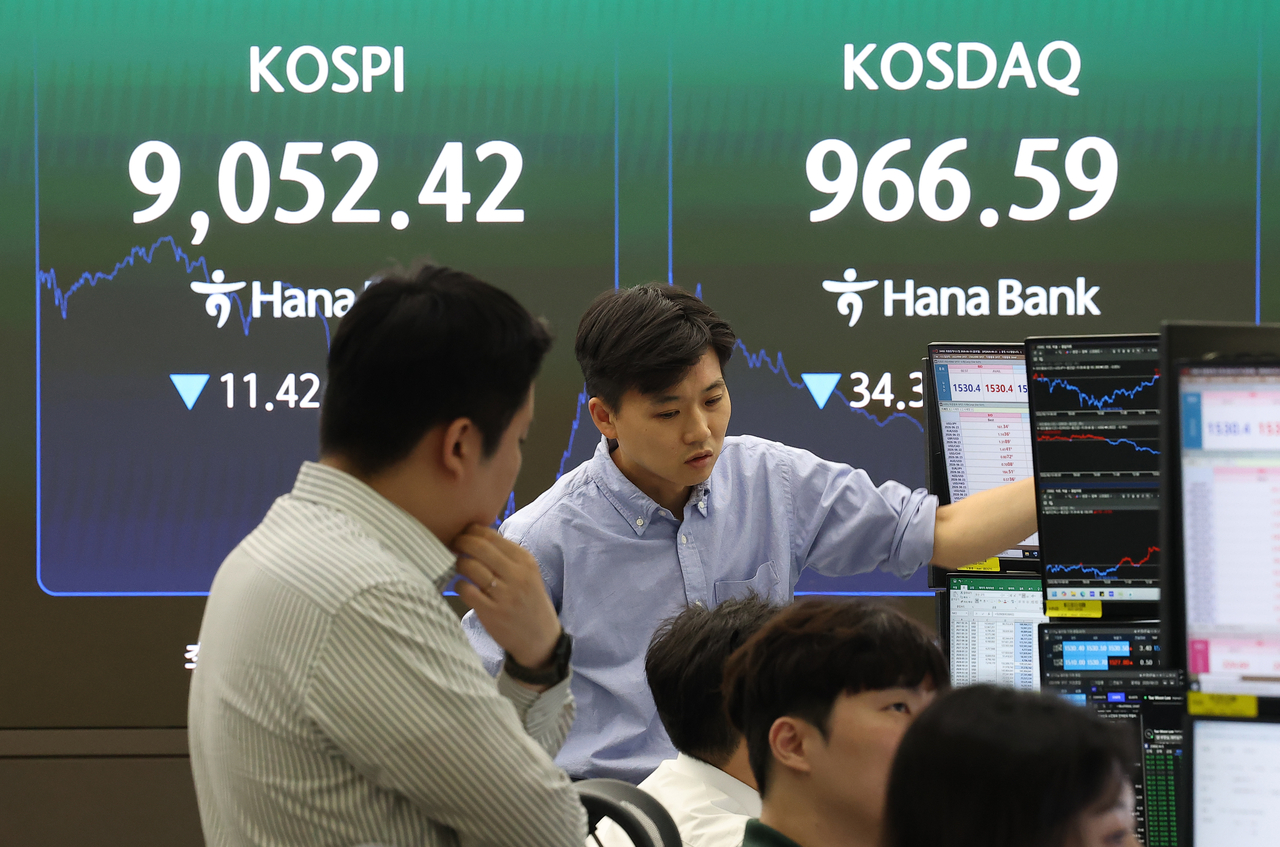
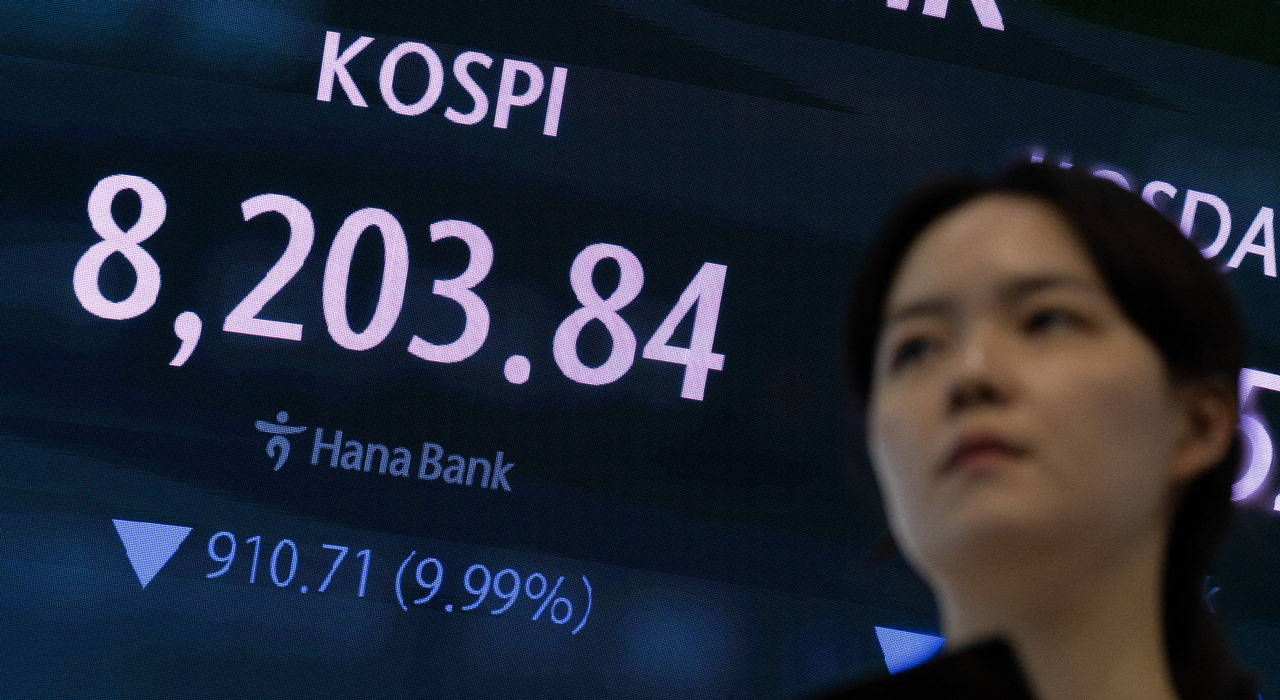
The South Korean benchmark Kospi dived nearly 10 percent on Tuesday, marking the second-largest daily decline of the year.
The Kospi fell 9.99 percent to close at 8,203.84. After opening at 9,083.54, down 0.34 percent from the previous session, it traded flat in early dealings before turning sharply lower around noon, eventually closing at its intraday low as losses deepened.
The nearly 10 percent decline was the second-largest daily fall on the Kospi this year, after a 12.06 percent drop on March 4 following the outbreak of the Iran war. It was also the fifth-largest single-day decline on record.
A series of trading curbs was activated to ease market volatility. A sell-side sidecar, a five-minute halt on program trading, was triggered at 11:40 a.m., and a circuit breaker followed at 2:33 p.m., prompting the stock exchange to suspend trading for 20 minutes.
Retail investors were the sole net buyers, snapping up a net 8.58 trillion won ($5.6 billion) worth of stocks on the main board, the largest ever daily net buying on the index, but it was not enough to keep the index afloat.
Foreign investors were net sellers of 4.13 trillion won in shares, while institutional investors also offloaded a net 4.55 trillion won.
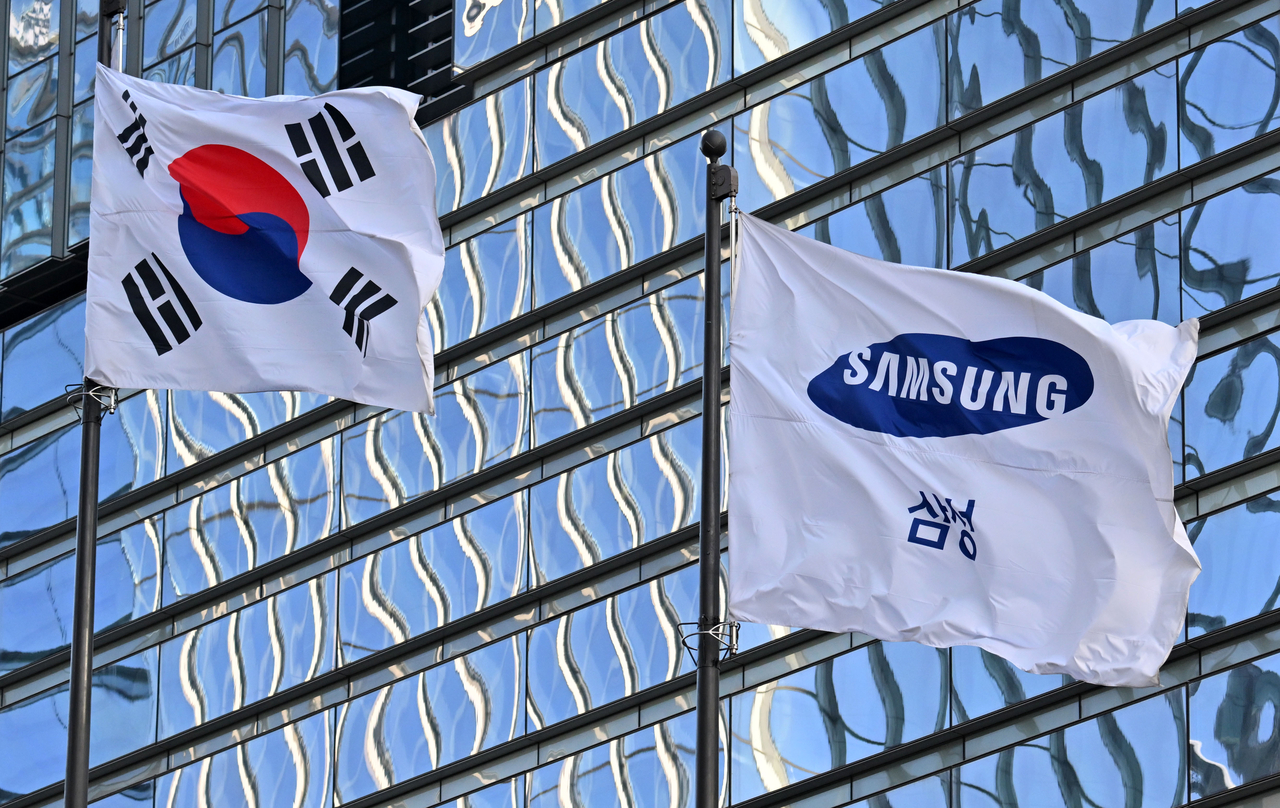
Chip stocks wobbled. SK hynix and Samsung Electronics both dropped about 12 percent, to 2.555 million won and 310,000 won, respectively, as of the close of daytime trading.
Though Samsung Electronics briefly overtook SK hynix in market capitalization during trading, SK hynix reclaimed the top spot by the close, retaining its lead from the previous session.
The two chipmakers were nearly neck and neck in market cap, with SK hynix at 1,820.9 trillion won and Samsung Electronics at 1,812.3 trillion won, a gap of just 8.6 trillion won.
Other large-cap stocks also declined. SK Square fell 7.01 percent to 1.832 million won, while Samsung Electro-Mechanics dropped 10.68 percent to 1.99 million won.
The junior Kosdaq market also came under heavy selling pressure. The index closed at 891.52, down 7.94 percent. A sell-side sidecar was triggered at 11:37 a.m.
Despite heavy foreign outflows from the stock market, the Korean won posted a modest depreciation. It was quoted at 1,539.1 per dollar at the close of daytime trading, weakening 2.1 won from the previous session.
Market analysts viewed the Kospi decline as a brief correction after recent rallies, rather than a shift in the broader trend.
Yuanta Securities analyst Lee Jae-won said, “The sharp gains are now being unwound,” calling it a “necessary correction,” considering the Kospi’s sharp gain.
“A concentration of flows is driving sharp, fundamentals-detached volatility,” said Kang Jin-hyeok at Shinhan Securities, adding, “Erratic swings are likely to become more frequent.”