
Global AI giant’s new office seen as bid to shape rules, forge ties with Kakao, SKT, LG
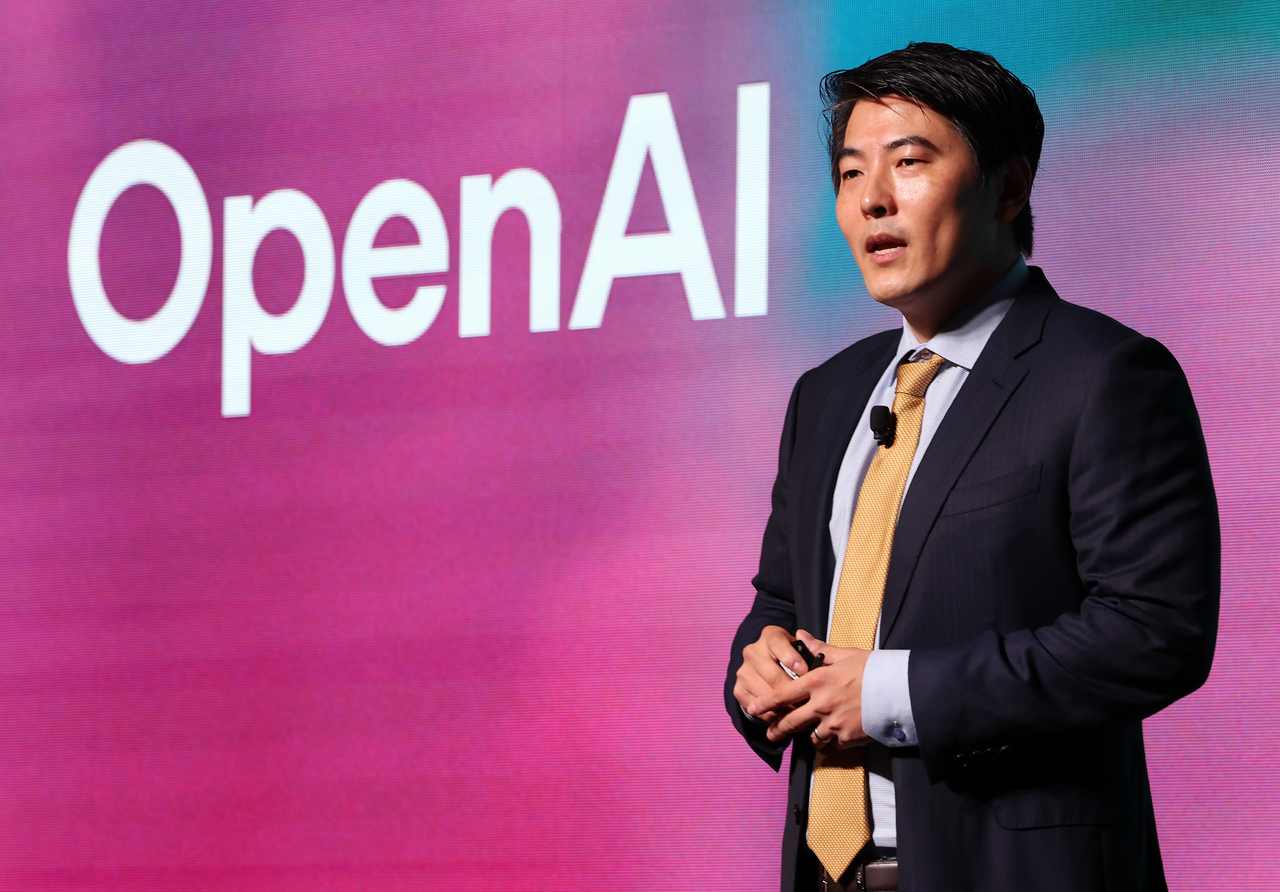
OpenAI, the creator of ChatGPT, launched its Korean subsidiary last week, marking its third office in Asia and 12th worldwide. The move has added fresh momentum and competition to Korea’s rapidly advancing AI ecosystem.
Industry watchers view OpenAI’s entry as a clear signal of Korea’s rising prominence as a global AI hub. With robust digital infrastructure and a tech-savvy population, the country is increasingly seen as a prime testbed for next-generation AI technologies.
“Korea is a unique combination of cutting-edge infrastructure, innovative companies and early adopters, making it an ideal hub for AI innovation,” said Jason Kwon, chief strategy officer at OpenAI, during a press briefing in Seoul on Sept. 10. “Korea is also leading the way in AI adoption.”
According to market research firm IMARC Group, Korea’s AI market was valued at $3.12 billion in 2024 and is projected to surge to $30 billion by 2033, posting a compound annual growth rate of 26.6 percent from 2025.
Observers interpret OpenAI’s Korea expansion as a dual-pronged strategy to capture market share while proactively aligning with evolving regulatory frameworks.
With Korea’s basic law on artificial intelligence is set to take effect in January 2026, the company’s local presence is widely seen as a preemptive step to navigate legal hurdles and forge early partnerships.
Seoul’s stature as a global digital content powerhouse further enhances its appeal.
“By integrating with Korea’s K-content ecosystem and digital platforms, OpenAI could transform Seoul into a global showcase for real-world AI applications,” said an industry source, who requested anonymity.
OpenAI has already unveiled strategic partnerships with leading Korean companies, including Kakao, SK Telecom, LG Electronics, Krafton and Yanolja — fueling speculation over potential future collaborations with tech giants such as Samsung Electronics and SK Group as well.
The company emphasized that its Korean strategy will focus on “growth through collaboration.” However, concerns are surfacing within Korea’s tech circles over a potential overdependence on OpenAI’s ecosystem.
“If OpenAI dominates Korea’s AI infrastructure, we may become overly reliant on US-based platforms,” said another source. “This is no longer just about who has the better model — it’s a race over scale, data sovereignty and computing power. OpenAI’s massive resources could overshadow domestic initiatives.”
Some sources suggest the timing of OpenAI’s launch may be a calculated move to influence Korea’s emerging regulatory norms from within.
“They’re not just here to scale their user base,” a source said. “They want a seat at the table — to shape the rules, define compliance and embed themselves in Korea’s digital policy architecture.”
The Korean government has declared 2025 the inaugural year of becoming a “global AI powerhouse,” rolling out ambitious policy road maps and funding programs to bolster domestic innovation.
But concerns are mounting within the local industry that partnerships between domestic companies and OpenAI — rather than homegrown AI firms — could hinder the development of Korea’s independent AI capabilities and delay efforts to secure technological sovereignty.
“While partnerships with OpenAI provide clear short-term benefits, continued investment in homegrown AI technologies is essential to maintain the autonomy and long-term competitiveness of Korea’s AI sector,” the source said.
“Unless Korean AI companies make meaningful strides in developing their own models and core technologies, they risk losing ground in the fast-evolving global AI race,” he added.
Adding intrigue to OpenAI’s expansion are rumors surrounding a possible equity stake involving Kakao founder Kim Beom-su.
“While Kim’s motivation may have waned due to health-related concerns, OpenAI’s strong ties with Kakao make a stake acquisition a plausible scenario,” said Kim Jin-gu, an analyst at Kiwoom Securities.
Meanwhile, Kakao is set to introduce ChatGPT-powered features directly into its flagship messaging app, KakaoTalk, as part of a strategic partnership forged with OpenAI in February.