
Exports pass $1bn on tariff relief, but cost volatility clouds outlook
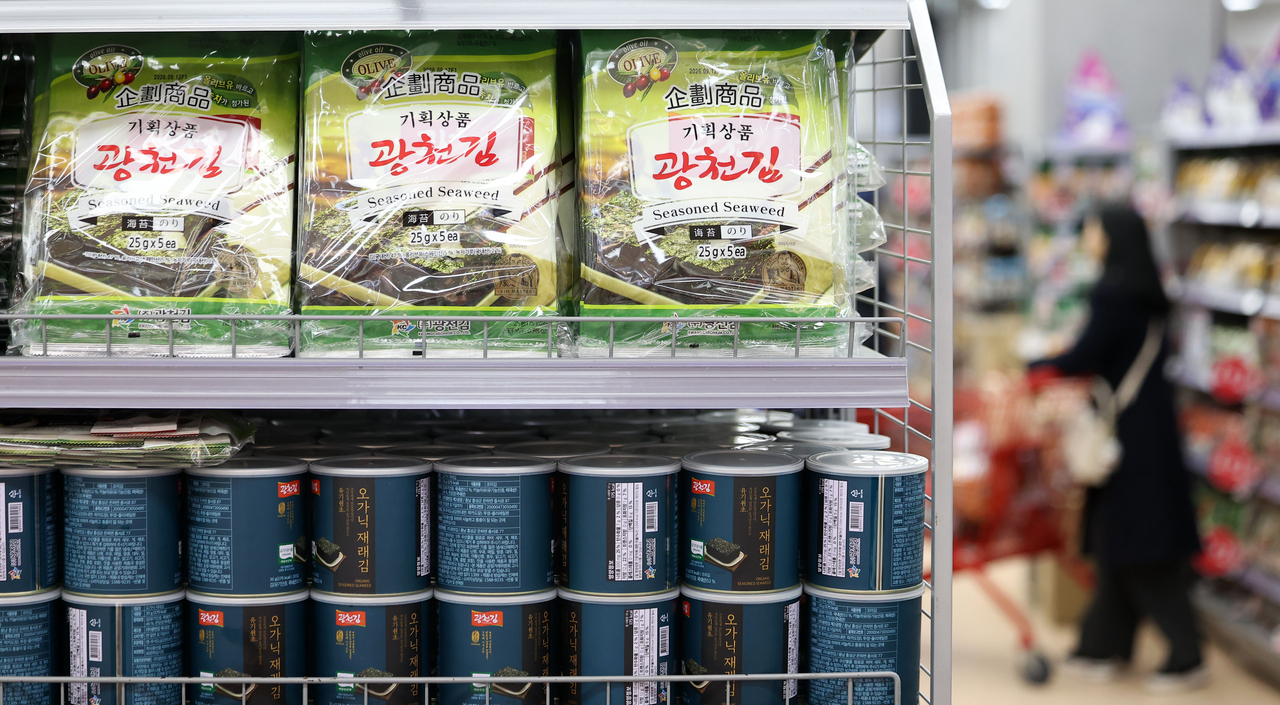
Korean dried seaweed, known in Korean as “gim,” has slipped into the global diet and, more tentatively, into the calculations of dealmakers, with prominent manufacturers weighing sales or outside investment.
Amid the growing popularity of gim across global diets, exports surpassed $1 billion for the first time as of November 2025, exceeding the full-year total of $997 million in 2024.
One recent transaction involves Sung Gyung Food, best known for its Jidopyo brand of seasoned seaweed, which Samchully Group, Korea’s leading city gas company, has agreed to acquire in full for about 119.5 billion won ($82.4 million). The deal is expected to close in March.
“We decided to proceed with the acquisition after considering the growth potential of Korea’s seaweed industry and the potential synergies with our existing food service businesses,” a Samchully Group official explained.
Holding the third-largest share of South Korea’s flavored seaweed market, Sung Gyung expanded its product lineup and overseas distribution, lifting exports to roughly 40 percent of revenue.
Sales rose 27 percent on-year to 123.6 billion won in 2024, and while profitability still lagged, the company’s export exposure and brand strength are expected to gain further momentum.
That tailwind appears set to build after seasoned seaweed was relieved of a 15 percent US tariff, an administrative adjustment that improves Korean producers’ standing in North America, a market accounting for more than a fifth of their exports.
Despite Korean seaweed offering a compelling mix of global demand and category leadership, structural risks remain, as seaweed manufacturing is a fixed-cost business with volatile inputs.
The biggest question mark now surrounds KwangcheonKim, Korea’s largest seaweed producer by sales, which derives nearly 60 percent of revenue from overseas markets.
According to industry sources, KwangcheonKim has explored options ranging from a sale to outside investment since June 2025, with two private equity firms recently expressing interest.
“We are reviewing investment opportunities, but we are not considering a sale of management control,” a company official said.
The company’s vertically integrated value chain, spanning seaweed cultivation, processing, packaging and distribution, is viewed as a key strength, supporting tighter cost control and greater product consistency. Still, volatility in raw seaweed prices, exposure to currency swings and rising logistics costs persist as significant concerns.
Industry sources said KwangcheonKim has floated a valuation of 300 billion to 400 billion won. Based on consolidated earnings before interest, taxes, depreciation and amortization of 24.1 billion won in 2024, that implies a higher multiple than Sung Gyung Food, which was valued at about 11 times EBITDA.
“As the market has expanded, it has become natural for companies to seek outside capital to support further growth,” one industry official said. “The sell-offs signal how much the industry has matured and point to a broader reorganization around larger, well-capitalized brands.”